The world below
Beneath Cusco, the Navel of the World, Andean tradition places the Ukhu Pacha, the inner world. The physicist Enrico Mattievich recognised in the Andes the Hades of the Greeks. Anselm Pi Rambla searched for its gateway in Cusco for more than forty years.
This page previews the research of the book HADES, now in preparation: what we hold, what we base it on and what still remains to be proven.
We hold that the Hades of the Greeks and the Andean Ukhu Pacha are the same place, and that beneath Cusco there is a real underground work, built with extraordinary precision: the gateway to the inner world.
The three worlds
Andean tradition divides the cosmos into three Pachas: the Hanan Pacha, the world above; the Kay Pacha, our world; and the Ukhu Pacha, the inner world. The three meet in Cusco, the Axis Mundi of the Andes.
The Ukhu Pacha is not an abyss of damnation: it is the sacred womb of existence, where the seeds of creation rest, the mallquis —the bodies of the ancestors— and the energy of the Amaru. For the initiatory traditions, descending into it is the katabasis of the Lesser Mysteries; ascending to the Hanan Pacha, the anabasis of the Greater ones.
The Q'ero, the people who served the Inca emperors, took refuge five hundred years ago in the mountains of Paucartambo, more than 4,000 metres above sea level, to escape the conquistadors, and lived cut off from the world until 1949. Their elders have kept the prophecy of the new Pachacuti: the end of chaos and the return of harmony and order.
Soon the great secret of Qosqo will be revealed, inside the Ukhu Pacha.
In 1959 they announced it before thousands of pilgrims. It is the secret guarded by the Capaccuna, and it has never been fully revealed: it was awaiting the new Pachacuti, which begins in our time.
Two paths, one land
Mattievich did not stop at the texts: he looked for the proof in the sky. The constellation of Draco, the dragon slain by Cadmus and Heracles, projected onto South America, covers the length of the Amazon, the great river of Hades.
In the sky, the distance between two stars is measured in degrees: the full Moon covers half a degree. On Earth, the length of a river can also be measured in degrees of the globe, and each degree is about 111 kilometres. That is how the Dragon and the river can be compared.
Mattievich himself noted that the Dragon is longer than the river and considered it a favourable coincidence: the allegory compares shape and course, not an exact measurement. Our calculation with modern coordinates (J2000) confirms his figure. The diagram shows the real shape of Draco, rotated and scaled as in figure IV-4 of his book.
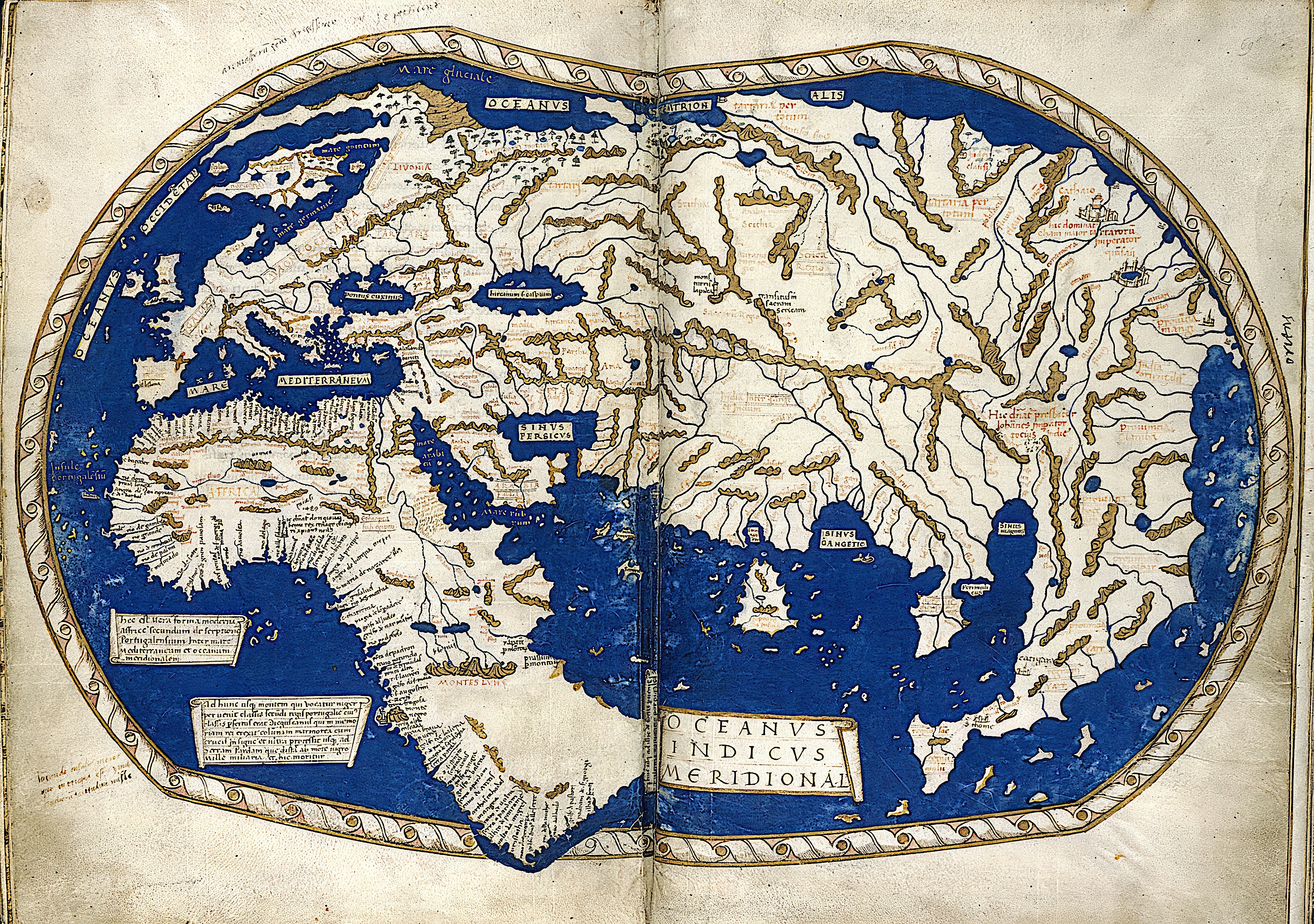
Mattievich found the Dragon in the sky; Paul Gallez and other historians, the Dragon's Tail on the ancient maps; Pi Rambla identified it with the Mythical Land of the tradition. Sky, maps and tradition point to the same land: South America.
The Odyssey places Hades on the Amazon, and the sky confirms it: the constellation Draco, the dragon slain by Cadmus and Heracles, spans the length of the great river.
Ulysses' journey to Hades did not take place in the Mare Nostrum: it was a voyage up the Amazon.
What the chroniclers tell
Since the 16th century, chroniclers, travellers and archives have described a network of passages beneath Cusco linking the fortress of Saqsaywaman with the Temple of the Sun.
“In many parts of the city there are great buildings underground, and in its very bowels some slabs and pipes are found today.”
Captain Ausi Topa, son of Túpac Inca Yupanqui, by his father's order made “a road underground in the fortress of this city of Cusco as far as Curicancha”, the temple of the Sun.
Beneath the towers of Saqsaywaman, a network of underground passages so intricate that not even the bravest dared to enter without a guiding thread.
An underground road of more than ten blocks, entirely carved, joined the fortress with the Temple of the Sun: “they called it the Chingana, which is to say where one gets lost”.
“Tiahuanaco and Cusco are connected by a gigantic underground road. The Incas do not know who built it.”
A cleric asks the Prior of the convent of Santo Domingo for permission to enter the “chingana located inside the said convent” in search of the Inca's treasure.
The gateway to the Ukhu Pacha
The access points to the Ukhu Pacha were the Koricancha, today the convent of Santo Domingo, and specific points of the citadel of Saqsaywaman. In the early 20th century the authorities dynamited and sealed the entrance to the caves to prevent accidents, and in time its location was forgotten.
Anselm Pi Rambla enters the Chinkana in Cusco.
Ground-penetrating radar surveys the Koricancha and the convent of Santo Domingo: 2,052 profiles with 100, 200 and 400 MHz antennas record colonial, Inca and pre-Inca structures, crypts and cavities.
A remote-sensing specialist reanalyses the 2000 profiles in Spain with state-of-the-art software, and finds why the radar did not then locate the crypt with the entrance to the tunnel.
With a far more advanced radar and 3D software, the Foundation locates the tunnel, of prodigious workmanship, with its exit at a precise spot in the convent of Santo Domingo.
The Decentralized Directorate of Culture of Cusco and the Foundation sign Agreement No. 0013-2024 for the Qosqo Project.
The Archaeological Research Project (PIA), approved by the Ministry of Culture in Lima, awaits the signature of the Decentralized Directorate of Culture of Cusco. With it, the Chinkana can be opened.
Two paths, one place
Mattievich reached Hades through physics and the Odyssey, following the Amazon. Anselm Pi Rambla reached it from Tibet and the sea, following the Sun. The two paths meet in Cusco.
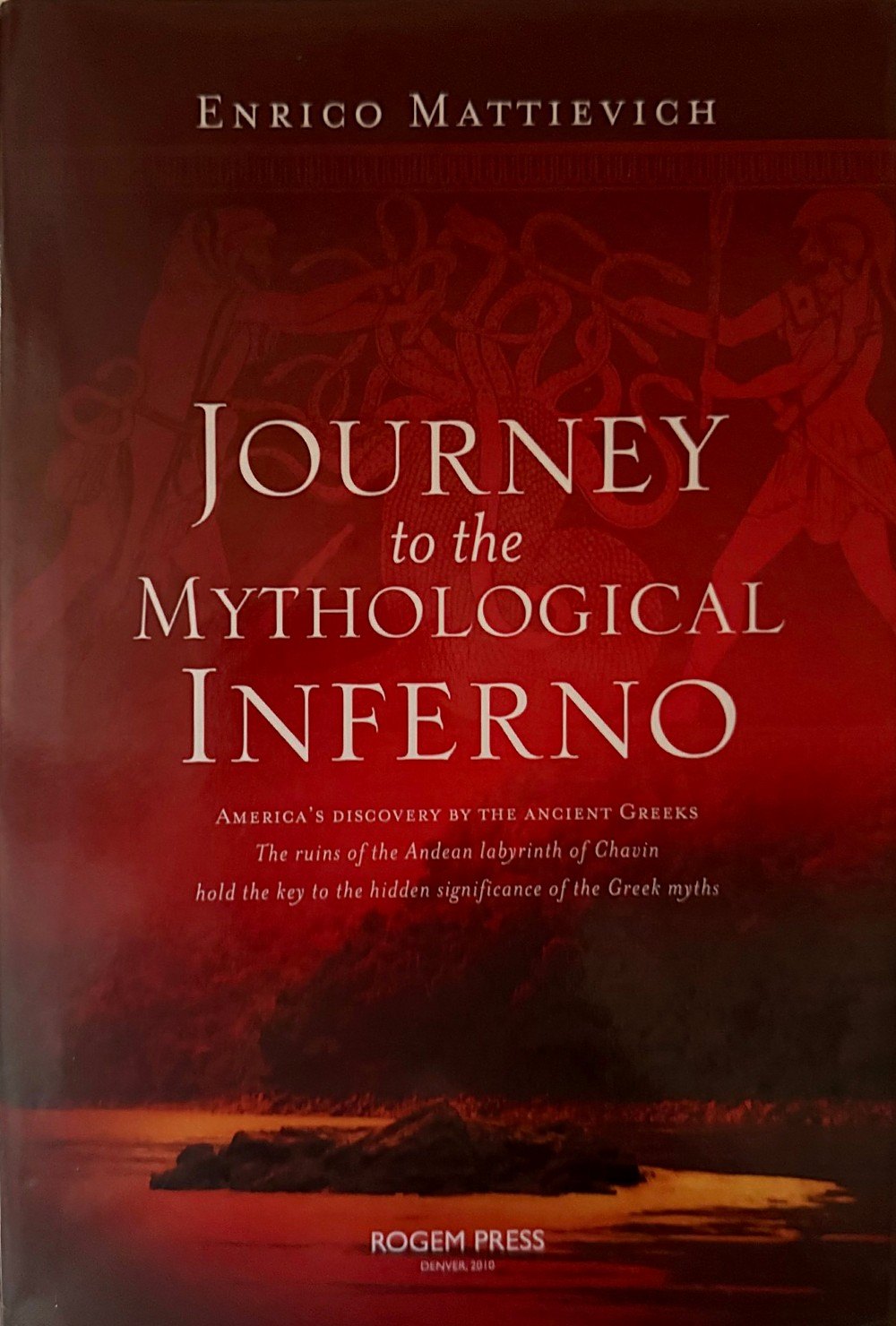
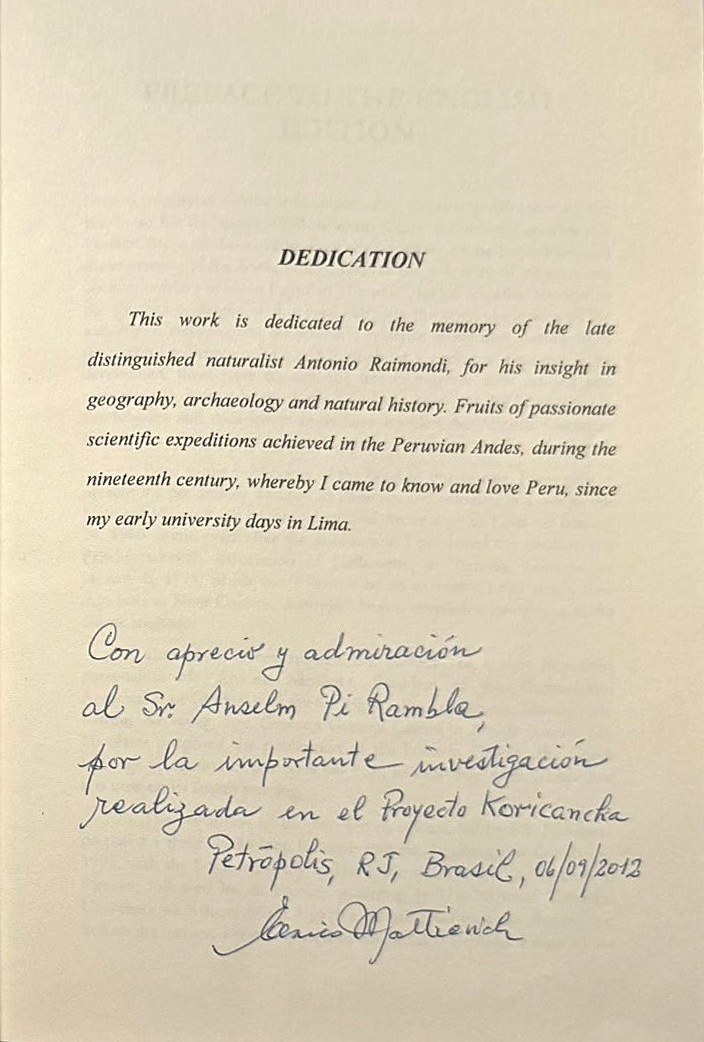
“With appreciation and admiration to Mr. Anselm Pi Rambla, for the important research carried out in the Koricancha Project.”Enrico Mattievich · Petrópolis, Brazil, 6 September 2012(Dedication from Enrico Mattievich to Anselm Pi Rambla)
“One route advances beneath the northern stars; the other, beneath the southern ones. One follows the serpent; the other, the tree. And both meet in the Andes of Peru, where Mattievich recognized the Hades of the Greeks, and Anselm Pi Rambla, in Cusco, the gate of the Ukhu Pacha, the Hades of the World.”
Pi Rambla Heritage Foundation · The Route of the Sun The Route of the Sun →The two paths came together. Together they maintain that Hades was not an ethereal myth, but a colossal work of precision engineering: an optical and vibrational infrastructure built by the Wiracochas, the Original Solar Race, beneath Cusco.
The Ukhu Pacha is the Hades of the world.
Who built it
We hold that the underground work of Cusco, like the World Tree and the Qhapaq Ñan, is the work of one and the same civilization: the Prime Mother Culture, the Solar Race of the Origins.
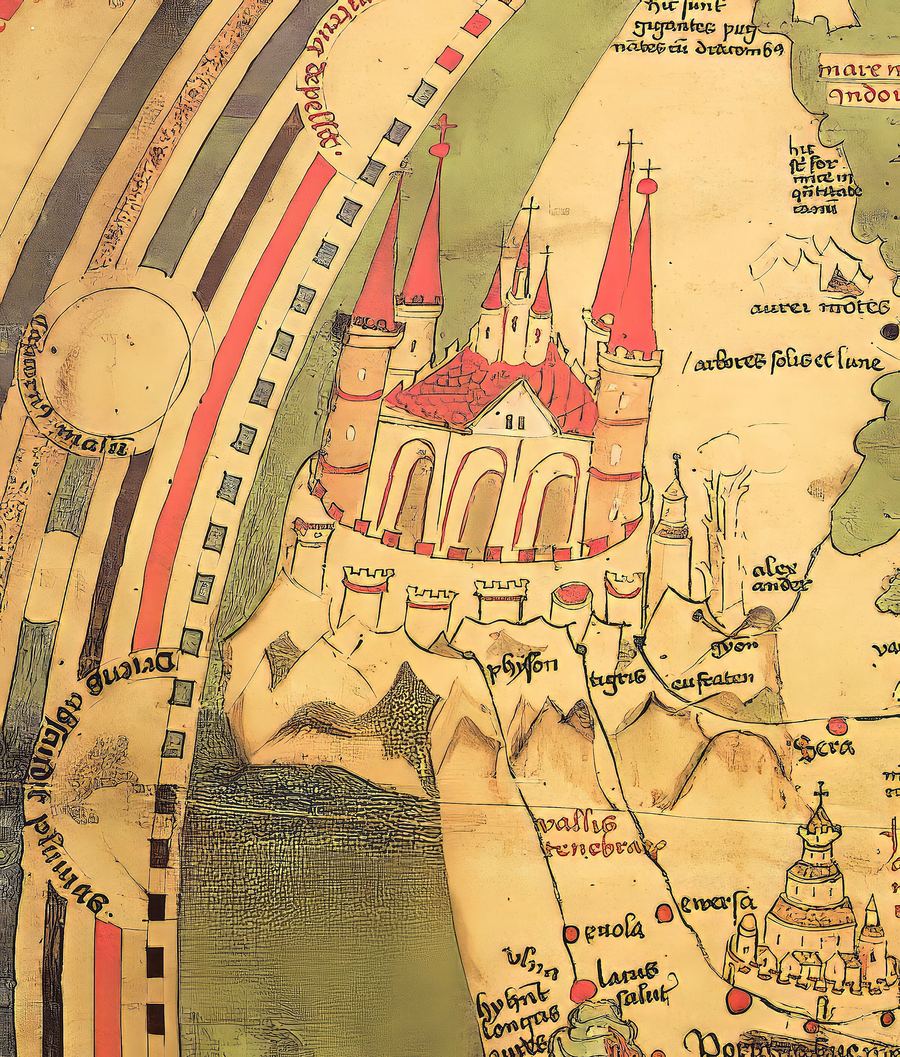
- Its origin: a southern polar region. After great cyclical cataclysms, it established its refuge in the Andes, in South America, the “Dragon's Tail” of ancient cartography.
- Its names: in the Andes, the pre-Inca and Inca peoples called them the Wiracochas; in the Indo-European tradition it is the planet's original Solar Race, the Hyperboreans of Greco-Roman literature. They are the same people.
- Its science: extraordinary scientific, astronomical and mathematical knowledge, written in stone, in the sky and on the land. Its trace is found in Egypt, Sumer, India, Greece, Mexico and Peru.
- Its guardians: the Capaccuna, the first Andean amautas, guarded this science and hid it from the conquistadors.
What remains to be proven
We want this research to withstand any scrutiny. That is why we state clearly what we hold and what is still to be verified.
- Open the Chinkana with the authorization of the Ministry of Culture of Peru, within the Qosqo Project.
- Document it with ground-penetrating radar, photogrammetry and 3D models, and publish the data.
- Study its stone. Trevor Hawke will lead the analysis: were the stones of Cusco carved, or made?
- Date the associated archaeological contexts.
HADES
The result of the convergence between Enrico Mattievich and Anselm Pi Rambla: the bridge between physics and cutting-edge archaeology.
The reader will descend into the depths of history to discover that the abode of the gods of the underworld is a monumental reality that was waiting to be awakened at the “Navel of the World”.