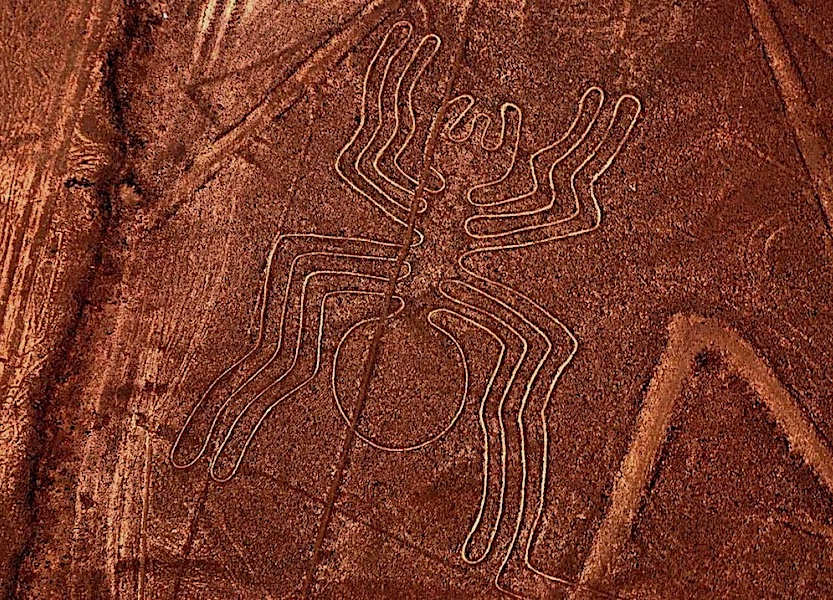
The meaning of the Candelabro
For centuries, the great geoglyph of Paracas Bay has been an unanswered enigma. Throughout all these years of research we have finally been able to decipher it in its entirety: the Trident / Candelabro is the representation of the World Tree, the Axis Mundi that appears in the traditions of all the peoples of the Earth.
When we are in the presence of a tree with a ternary form, with its central column and its two lateral columns of analogous and opposite duality, joined in balance by a triangle into a single tree, then that tree represents the true Axis of the World, known as the Axis Mundi.
The Triangle that joins the three axes of the geoglyph is regarded as one of the signatures of the Celestial Pole, and represents the Unity that contains the three existing worlds connected by its Central Axis, which gives access to the three regions of our dimensional space: the Cosmos, our Earth and the Inner or Underground World, the three Pachas of the Andean tradition: Hanan Pacha, Kay Pacha and Ukhu Pacha.
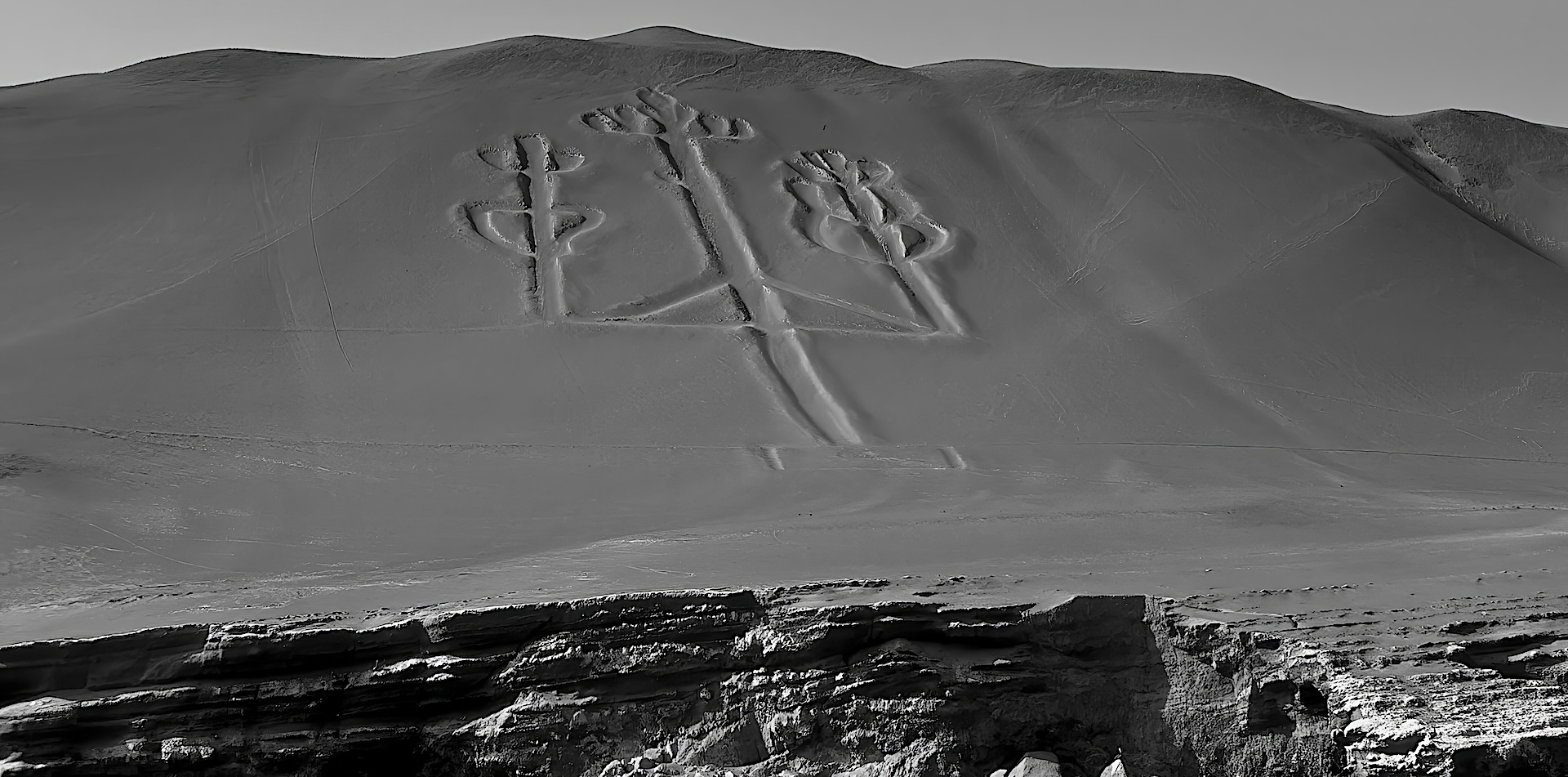
The Candelabro does not look at the land, but at the sky and the Pacific Ocean. All its geometry is born from the Southern Cross:
- Its base is a Harmonic Rectangle of 20.40 × 14.40 metres, the proportion between the long and short arms of the constellation.
- Its central arm points to the South Celestial Pole, the “Navel of the Sky” of the American peoples.
- Every 3 May, on the ancient Andean feast of the Cruz Velakuy, the long axis of the Southern Cross aligns with the central axis of the Candelabro.
One axis shared by all peoples
All the great traditions of humanity preserve the memory of one and the same symbol: an axis that joins the sky, the earth and the inner world. Its name changes, but not its meaning.
The Norse Yggdrasil · the Maya Ceiba (Wakah Chan) · the apple tree of Avalon · the lotus of Meru · the palm of the Guaraní Yvymarae
The Vedic Meru · the Iranian Haraberezaiti and Qâf · Gerizim · Golgotha · the Kaaba · Borobudur · the ziggurats, Dur-an-ki
The seven Dwîpas of Meru · the Chinese Residence of the Great Peace · the Vâr of Yima · Asgard · Avalon · the Isles of the Blessed
Hanan Pacha, Kay Pacha and Ukhu Pacha, joined by the axis of Cusco
Mircea Eliade, the great historian of religions, described this same “system of the world”: an axis, the Axis Mundi, joins Heaven, Earth and the world below, and always rises at the Centre of the World, the “Navel of the Earth”. It may be a column, a ladder, a tree or a mountain. Temples are replicas of that Cosmic Mountain, and their foundations sink into the lower regions.
The masters of the Perennial Philosophy —René Guénon, Ananda K. Coomaraswamy, Bal Gangadhar Tilak, Oscar Freire and Adrian Snodgrass— among many others, took this idea further: the Centre of the World is the reflection of a Primordial Seat, the abode of the Wisdom of the Origins, prior to history.
According to Guénon, the sacred name of the Primordial Seat was Tula, “the Balance”. When the polar Seat became inaccessible, that name and its function passed to spiritual centres made in its image, in America too:
Tollan-Teotihuacán · Tula · Aztlán · Chicomóztoc, “the Place of the Seven Caves” · Tamoanchan, “where heaven and earth meet”
The Guaraní Yvymarae , the “Land without Evil” the flood cannot reach · the “unchanging centre” of the Yagua
Wiñay Marka, the “Eternal City” of Titicaca · the cave of Pacaritambo, from which Manco Cápac emerged
Qosqo, the Navel of the World, meeting point and connection to the Bab Apsû, the sacred gate into the Apsû, in the Ukhu Pacha, the inner world of the Andes.
For us, myths are not folklore. Following the ancient Art of Memory, we read them as documents that hold real, encoded knowledge. That knowledge comes from one and the same source: the Primordial Mother Culture.
The Qhapaq Ñan, a colossal work
What the Candelabro represents as a symbol, the Andes show traced upon the land. The Qhapaq Ñan is not just a network of roads: it is a colossal geodetic system, unique on the planet.

The Route of Wiracocha links sacred centres such as Tiahuanaco, Pukara, Raqchi, Cusco, Ollantaytambo, Machu Picchu and Cajamarca (among others), as described by María Scholten de D'Ebneth. Her studies, those of other authors and those of our own Foundation lead to the same place: the centre of this network is in Cusco.
Discover the Qhapaq Ñan →Cusco, the true Axis Mundi
The axis the Candelabro symbolises exists physically in Cusco. It is the Umbilicus Mundi, the Navel of the World: the centre of the Qhapaq Ñan and the point where the three worlds cross. An interdimensional portal designed to join the sky, the earth and the enigmatic underground world.
Cusco was not founded at random. It rose where the vertical axis of the three pachas crosses the four suyus of the Tawantinsuyu. That union forms a three-dimensional cross that connects all dimensions.
For a temple to rise towards heaven, its foundations must sink into the lower world. It is a law of every Sacred Centre:
It rose upon the Bab Apsû, the Gate of the primordial Abyss.
The foundation stone, on Mount Moriah, sealed the “mouth of the Tehôm”, the abyss of the waters.
The Koricancha and Saqsaywaman are the outer crown of a network of galleries, the chinkanas, that descends into the Ukhu Pacha.
Saqsaywaman is precisely the head of the feline, the Celestial Jaguar that represents Wiracocha. Its three great zigzag walls represent the three pachas. According to the amautas, the Andean sages, its original titanic architecture was raised by the Wiracochas, that is, the Primordial Mother Culture, and the Incas later built upon it.
Beneath the citadel opens the entrance to the Ukhu Pacha: a network of galleries that links Saqsaywaman with the Koricancha. Anselm Pi Rambla entered the Chinkana in 1982, and in 2023 3D ground-penetrating radar detected those structures underground. Opening this Axis Mundi is the goal of the Qosqo Project.
See the Qosqo Project →Hades exists
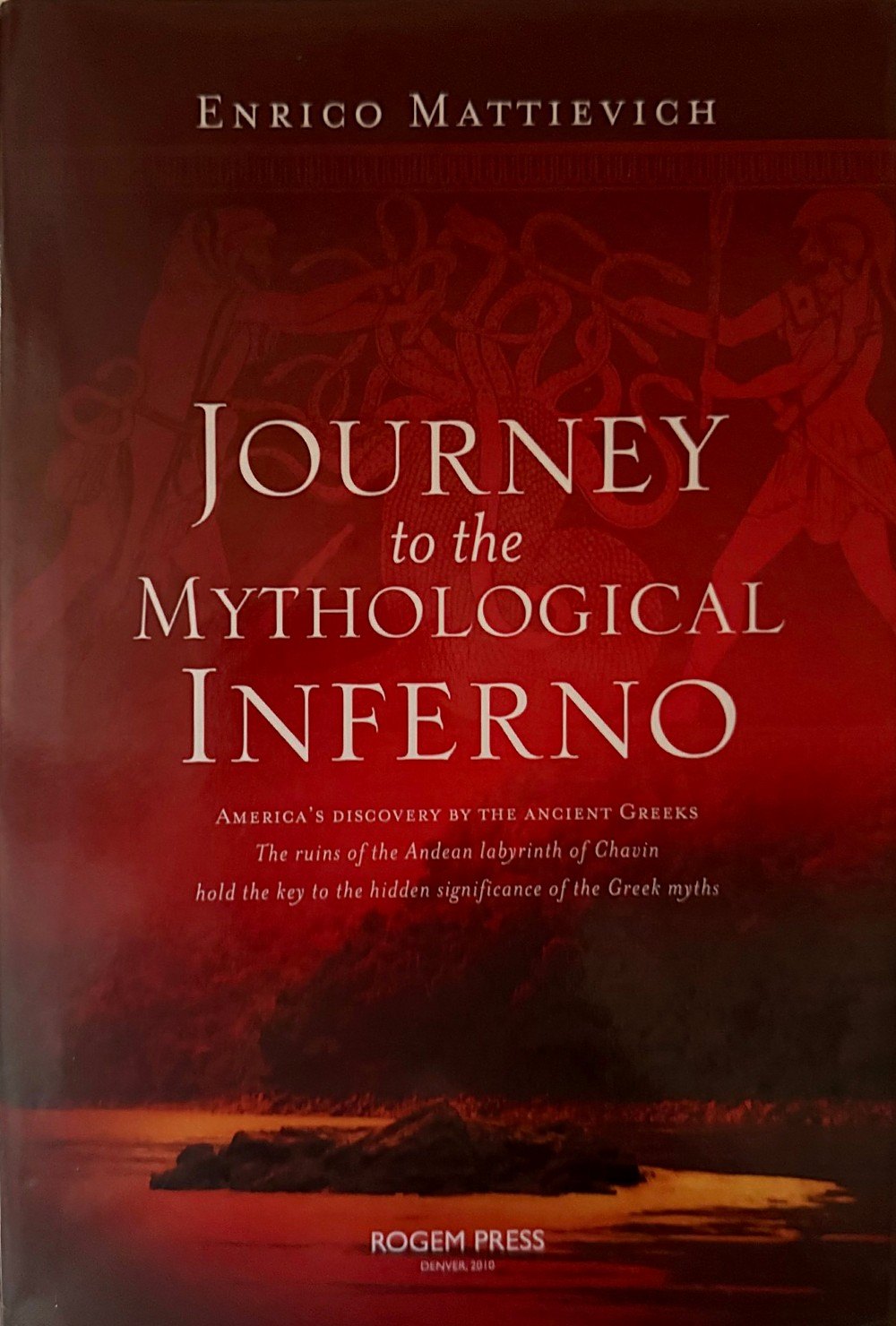
“No one bothered to examine the stories of the lost world, which poets preserved in their songs and priests in their religions, precisely in the place where it was described: on the lower side of the known world, literally Inferno.”Enrico Mattievich · Journey to the Mythological Inferno
For centuries, the underground world and the civilization that built it were relegated to myth. The convergence of the work of two researchers has drawn back the veil: the Hades of the Greeks and the Andean Ukhu Pacha are the same place.
In Greek, Hades (A-idēs) means “the unseen”. It was not a place of punishment, but the sanctuary of the origin, where knowledge is kept safe from cataclysms.
It is a very ancient tradition. As early as the 5th century BC, the Egyptian priests told Herodotus that Pharaoh Rhampsinitus had descended alive into Hades and returned to the world of the living with a golden napkin, a gift from the goddess Demeter (Histories, II, 122).
Following Circe's directions, Odysseus's ship crosses the Ocean to its farthest bounds, where the Cimmerians dwell, wrapped in mist and darkness, never reached by the rays of the Sun (Odyssey, books X and XI). There, beside a rock, the Pyriphlegethon and the Cocytus, a branch of the Styx, flow into the Acheron, the greatest river of the Underworld. For Mattievich, that Acheron is the Amazon.
Enrico Mattievich
A world-renowned nuclear physicist and professor emeritus at the Institute of Physics of the Federal University of Rio de Janeiro (UFRJ), he applied physics to mineralogy, palaeontology and archaeology. In Journey to the Mythological Inferno (Rio de Janeiro, 1992; English edition, 2010) he analysed Hesiod's Theogony and Homer's Odyssey through geology, physics and literature. His conclusion was revolutionary: Ulysses' journey to the underworld is not a fable, but the encoded chronicle of real transatlantic voyages. The Hades of the Greeks was Peru.
October 1995, Athens: the National Technical University awards him the Prometheus Medal “for stealing the fire of the gods”. Athens and Cusco have been sister cities since 1991.
Anselm Pi Rambla
Researcher and explorer Anselm Pi Rambla is the discoverer of the underground tunnel network of Cusco and of the location of its main entrance: the famous Chinkana of legend.
Mattievich himself records in his book the Chinkana described by Guamán Poma: a labyrinth running from Saqsaywaman to the Koricancha, where, according to Pedro Pizarro, great treasures were hidden.
After decades of exploration and ground-penetrating radar excavations at the Koricancha and Saqsaywaman, the Qosqo Project, directed by the Pi Rambla Heritage Foundation, achieved the physical rediscovery of that Chinkana Grande: an immense tunnel of andesite blocks polished to an astonishing perfection, linking the Temple of the Sun with the cyclopean fortress of Saqsaywaman.
Fieldwork across the Andes has confirmed Mattievich's data.
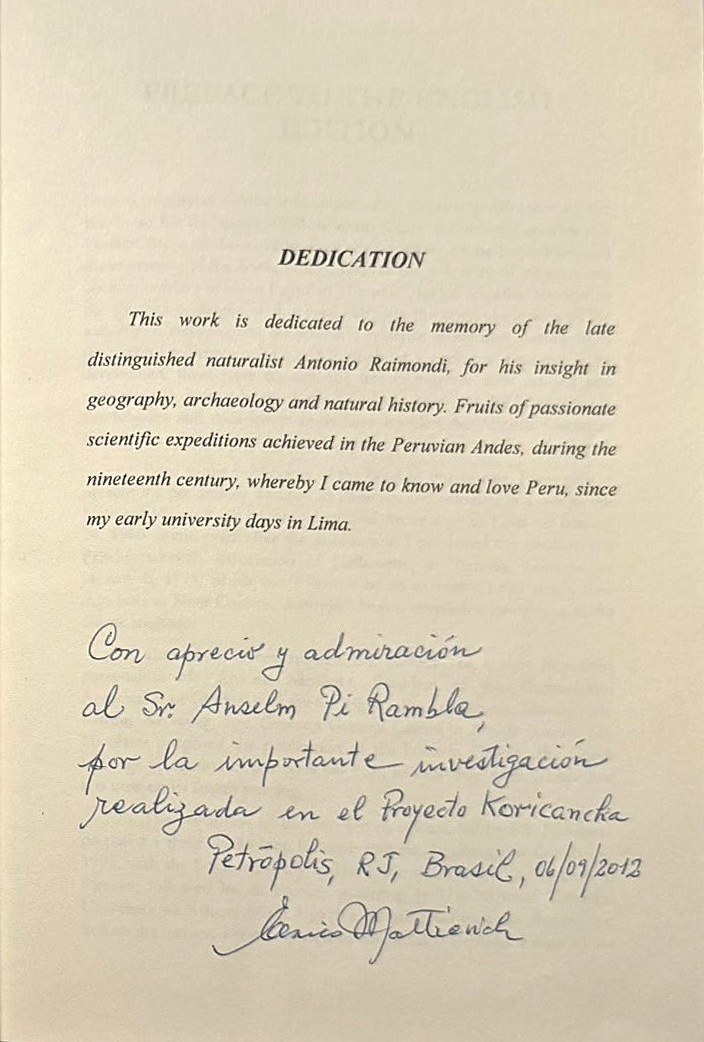
“With appreciation and admiration to Mr. Anselm Pi Rambla, for the important research carried out in the Koricancha Project.”Enrico Mattievich · Petrópolis, Brazil, 6 September 2012(Dedication from Enrico Mattievich to Anselm Pi Rambla)
The two paths came together. Together they show that Hades was not an ethereal myth, but a colossal work of precision engineering: an optical and vibrational infrastructure built by the Wiracochas, the Original Solar Race, beneath Cusco.
The Ukhu Pacha is the Hades of the world.
The Ukhu Pacha is not an abyss of damnation: it is the sacred womb of existence, where the seeds of creation rest, the mallquis — the bodies of the ancestors — and the energy of the Amaru. For the initiatic traditions, descending into it is the katabasis of the Lesser Mysteries; ascending to the Hanan Pacha, the anabasis of the Greater.
Those who built it
The World Tree, the Qhapaq Ñan and the Axis Mundi of Cusco are the work of one and the same civilization: the Primordial Mother Culture, the Solar Race of the Origins. It built this legacy for us.
- Its origin: a southern polar region. After great cyclical cataclysms, it established its refuge in the Andes, in South America, the “Dragon's Tail” of ancient cartography.
- Its names: in the Andes, the pre-Inca and Inca peoples called them the Wiracochas; in the Indo-European tradition it is the planet's original Solar Race, the Hyperboreans of Greco-Roman literature. They are the same people.
- Its science: extraordinary scientific, astronomical and mathematical knowledge, written in stone, in the sky and on the land. Its trace is found in Egypt, Sumer, India, Greece, Mexico and Peru.
- Its guardians: the Capaccuna, the first Andean amautas, guarded this science and hid it from the conquistadors.
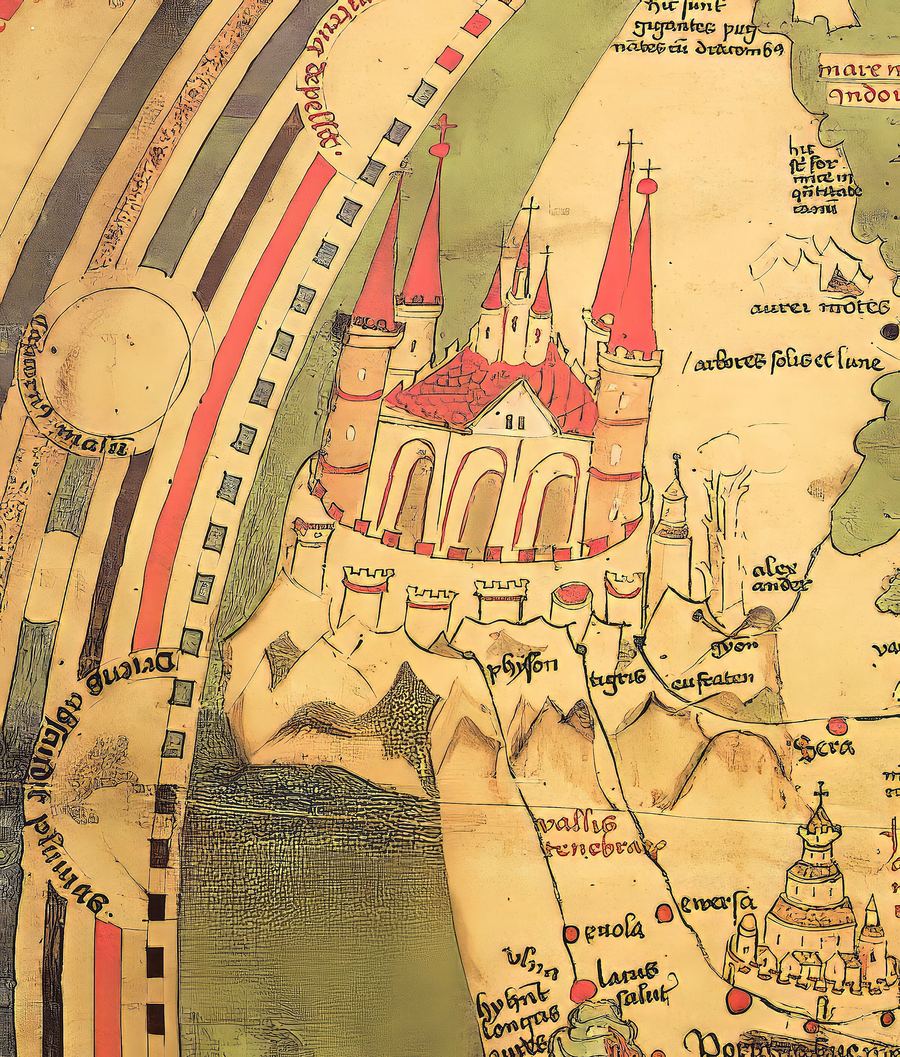
Two paths, one land
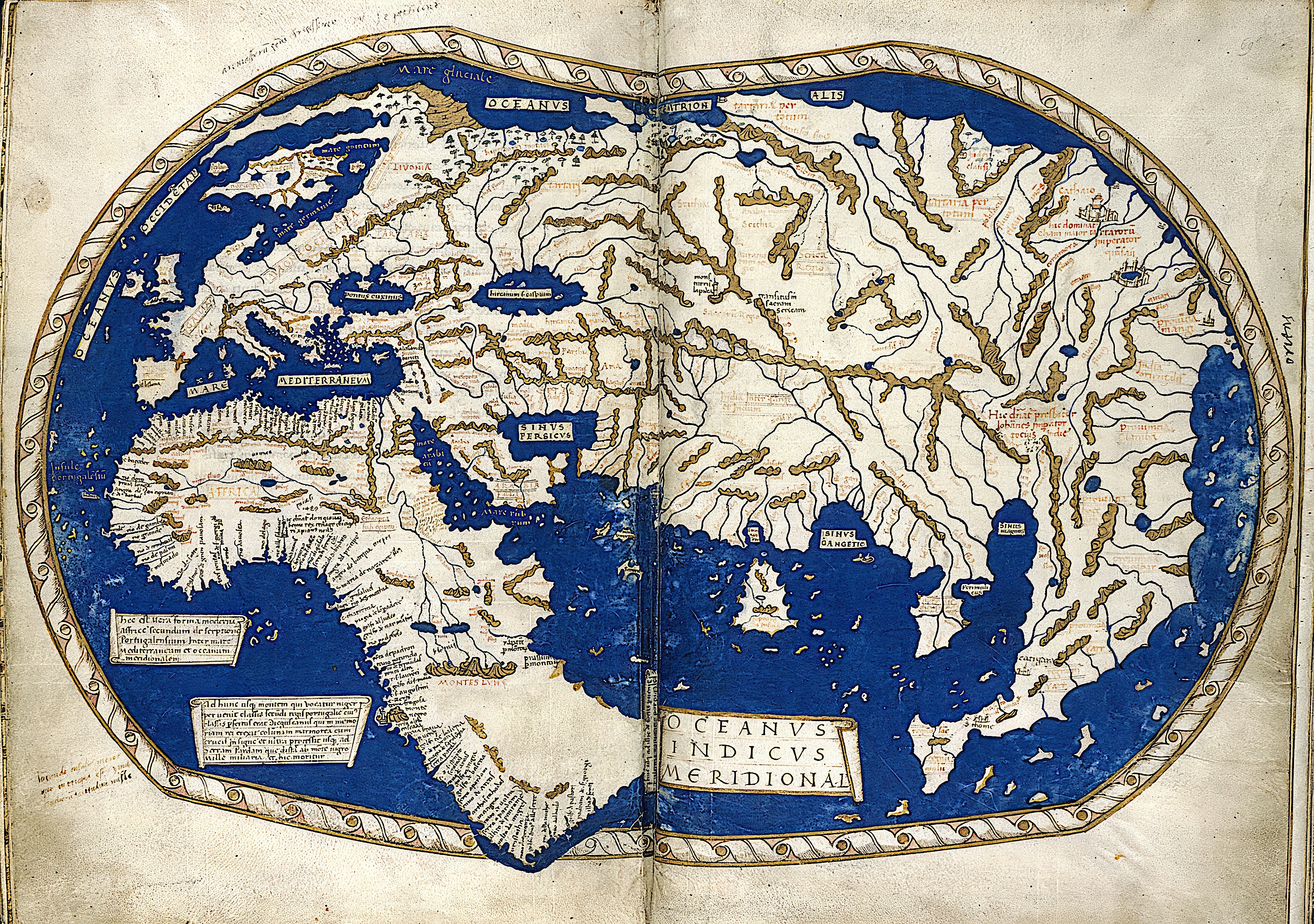
Mattievich found the Dragon in the sky; Pi Rambla, the Dragon's Tail on the ancient maps. Both point to the same land: South America.
The Odyssey places Hades on the Amazon, and the sky confirms it: the constellation Draco, the dragon slain by Cadmus and Heracles, spans the length of the great river.
Ulysses' journey to Hades did not take place in the Mare Nostrum: it was a voyage up the Amazon.
This is the foundation of the Prime Civilization research and the fruit of more than 40 years of research by Anselm Pi Rambla. Our purpose is to bring its tangible legacy to light.
How we research
Every conclusion on this page comes from a specific discipline and a verifiable result. This is the Foundation's method.
In 2023, radar detected beneath Cusco the galleries Anselm Pi Rambla walked in 1982.
See section 04 → ArchaeoastronomyThe Candelabro and the Southern CrossIts geometry is born from the constellation and its axis points to the South Celestial Pole. Every 3 May, the Southern Cross aligns with it.
See section 01 → PalaeocartographyThe ancient mapsThe Dragon's Tail in Martellus (1489) and the Earthly Paradise in Walsperger (c. 1448).
See the Dragon's Tail → GeodesyThe axes of the Qhapaq ÑanThe two great 45° axes and the 22.5° Chekkaluwa, measured at the royal doorway of the Koricancha.
See section 03 → Comparative mythologyHades on the AmazonWith Enrico Mattievich: the Odyssey and the Theogony read against the real geography of South America, and Draco over the great river.
See section 05 → Chronicles and archivesThe documentary sourcesGuamán Poma and Pedro Pizarro describe the Chinkana; the documents of the Dominican order speak of what it holds.
See section 04 →Born from this research
The Prime Civilization is the Foundation's mother research. Each field project puts a part of it to the test.
HADES
The result of the convergence between Enrico Mattievich and Anselm Pi Rambla: the bridge between physics and cutting-edge archaeology.
The reader will descend into the depths of history to discover that the abode of the gods of the underworld is a monumental reality that was waiting to be awakened at the “Navel of the World”.
UMBILICUS MUNDI
THE LATEST BOOK BY ANSELM PI RAMBLA
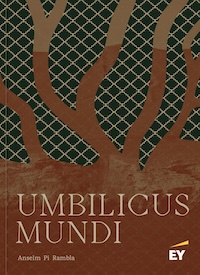
The book Umbilicus Mundi is a master index that articulates the Prime Civilization research in pre-Columbian America. It brings together the scientific thesis that connects an unknown ancient cartography with the Paracas Trident/Candelabro and the Andean geodetic network. It is the master map that turns legend into a real archaeological quest.
Strategic Collaboration
We believe that science advances through cooperation. If you represent an academic institution, research centre or technology organisation interested in collaborating with our exploration protocols, we invite you to contact our Directorate:
Marc Qumran (CEO)
heritage@pirambla.org