
Chinkana Grande Sector - Tired Stone


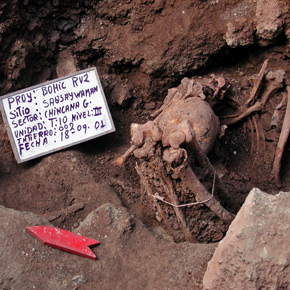
After the discovery of Tomb 01, the project management cleaned the floor of the Inca enclosure, covered by material fallen from above and by rubbish dropped by visitors from a modern path. In the southeast corner the ground had sunk, and it was explored with a 2 × 2 metre square down to 1.40 metres, in a layer of gravel and clay.
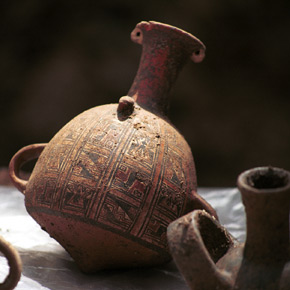
There, Funerary Context 02 appeared: a man aged 25 to 30, buried in a foetal position, looking down and facing the probable entrance of the TIRED STONE. Under his spine lay two small and beautiful aryballos and two small ceramic jugs, one in Chimú style and the other, smaller, in Inca style. Under the pelvis appeared a small plate with a bird-shaped handle.
To the northeast of the tomb lay the skull of a child aged 3 to 5. Beneath the remains were two champi knitting needles wrapped in balls of wool, a small silver pushka (spindle) with a worked camelid-bone handle, a silver ring and two small champi clasps.
The tocapu decoration of the aryballos and the plate is comparable, according to the literature consulted, to that of the garments of the Inca and the Coya, worn by the imperial elite of Cusco.


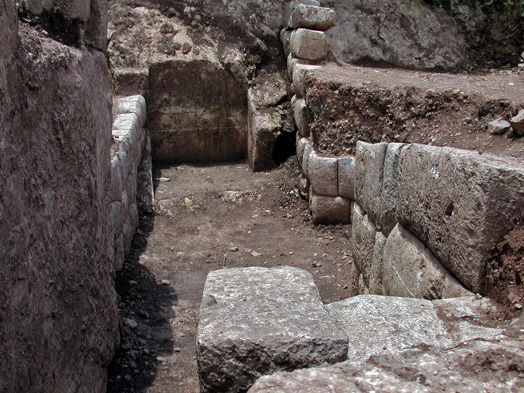
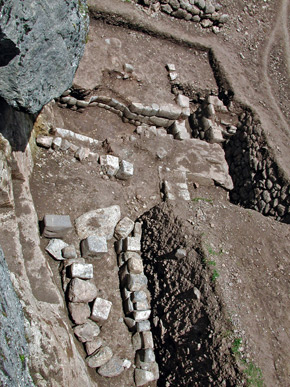
Around the rock, on the north, east and west sides, exploration and drainage trenches were opened to evacuate groundwater: more than 80 metres long, 1 metre wide and up to 3.80 metres deep.
The trenches uncovered sections of stone walls bordering the carved rock. While draining the water on the southwest side, Inca walls and stairways appeared, and on the south side, new carvings in the rock. From the north side of the Suchuna sector to the south side of the TIRED STONE, a direct connection between both sectors appeared.
This architectural evidence, with beautiful doorways, niches and alcoves, opens a new line of research on the TIRED STONE, not considered until now. The findings broaden the knowledge of Saqsaywaman and the known extent of the monument.

